March 7, 1990, 1990
pencil and ink on paper
27.5 × 34 cm
Raoul de Keyser. March 7, 1990
5 March – 16 April 2022
Galerie Barbara Weiss
Raoul De Keyser
March 7, 1990, 1990
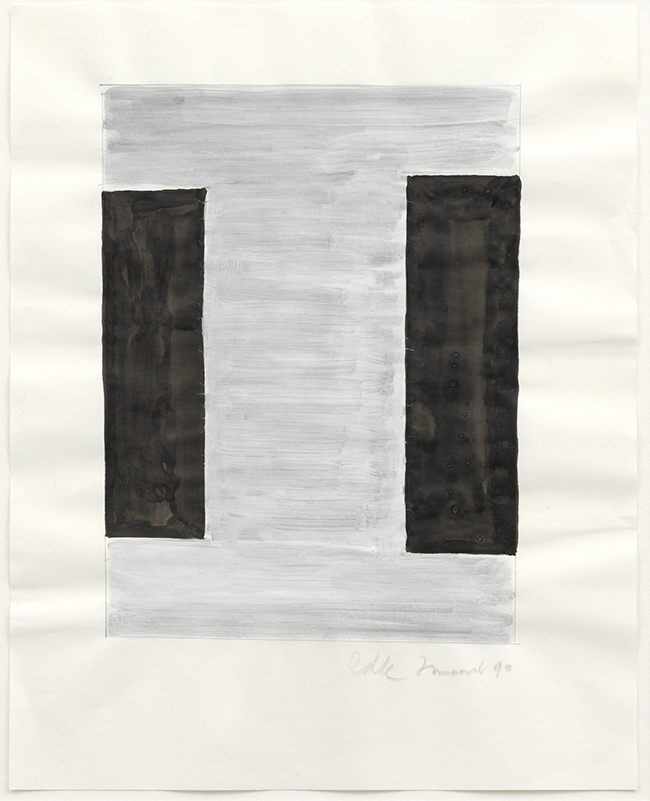
pencil, ink and gesso on paper
27.5 × 34 cm
[from the pressrelease]
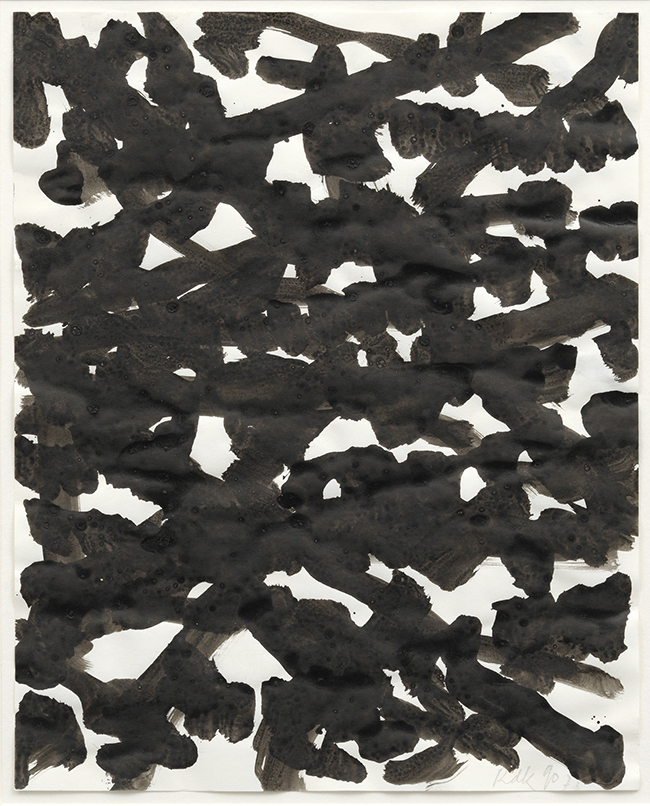
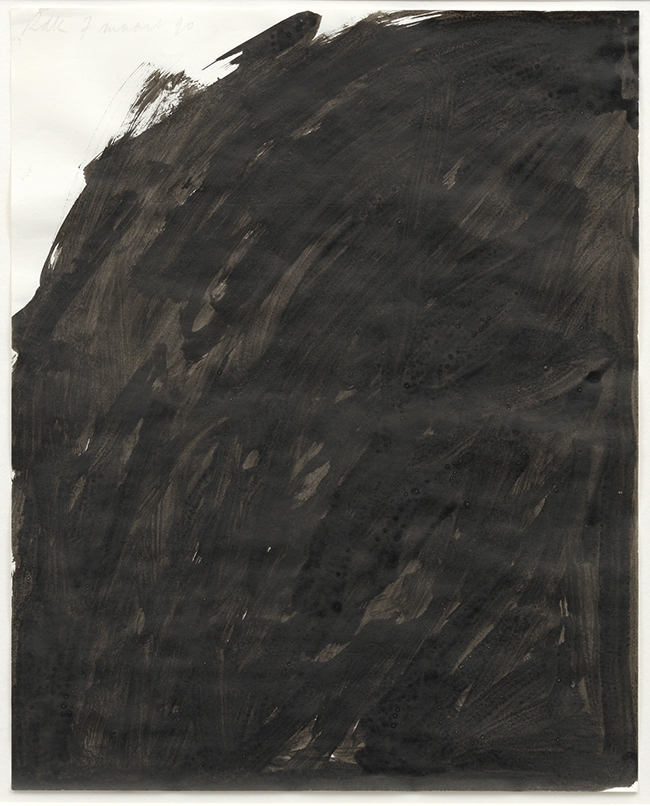
On March 7, 1990, Raoul De Keyser made twelve works on paper. They were all executed on the same type of paper in black, white and shades of grey, making use of the possibilities of pencil, ink, and gesso. Many exhibit the geometric forms that marked De Keyser’s work at that time, others seem to indulge in the invigorating action of scribbling, still others allow ink to pool and bleed, letting intention and inadvertency play out in the mark making. Seen together, this suite forms an inventory of sorts of De Keyser’s motifs on canvas at that time, referring—in some instances—to specific paintings and—in others—to themes and compositions that the artist had explored and would continue to in the years to come. De Keyser often worked on paper— speaking about this practice as a liberating and generative one. And while it was not unusual for the artist to make black and white versions on paper after works that were completed on canvas, creating them in such a formally concise series, and further bracketing them by the insistence on the day they were created, is singular in Raoul De Keyser’s oeuvre (…)
The series, March 7, 1990 is not only about looking back; it is a mnemonic device, but it also looks ahead. Remarkably, the motifs in two drawings would only later appear on canvases. The first, Oost, 1992, is an all-over based on the branches of a monkey puzzle tree, which appeared in his work in the years prior but never as such an abstracted field. The second, Noord, 1992, is a densely worked, dark canvas, which has a white line extending from the bottom at a steep angle into the composition. On paper, the impasto brushwork is done in pencil, and the white line in thick gesso.
Raoul De Keyser
March 7, 1990, 1990
pencil, ink and gesso on paper
27.5 × 34 cm

8.12.1989, 1989
Graphite and colored pencil on paper
29.7 × 21 cm
Gerhard Richter. Drawings | Zeichnungen 1963 – 2020
29 January – 12 March 2022
Sies + Höke, Düsseldorf
Gerhard Richter
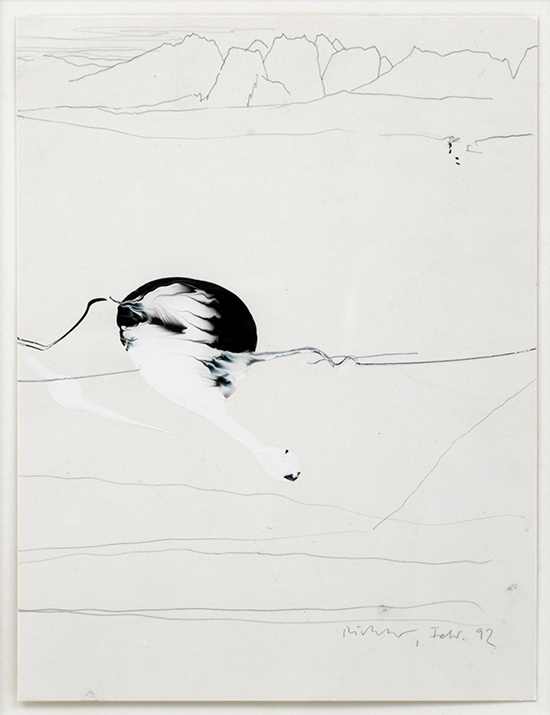
Ohne Titel (Febr. 92), 1992
Oil and graphite on paper
21 × 16 cm

Gerhard Richter
VII. 91, 1991
Indian ink (brush) on paper
16.5 × 24 cm
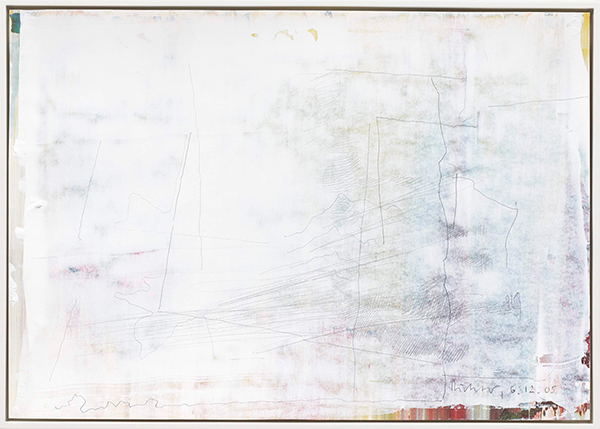
Gerhard Richter
Snow White, 2005
Acrylic and graphite on offset print
22.5 × 32 cm

Gerhard Richter
Portrait Günther Uecker, 1968
Graphite and oil on primed canvas
50 × 38 cm

Untitled (Sigmar Polke, Ad Reinhardt, Physiognomical Changes, The Insiders), 2015
Montage, gouache on the back of a drawing paper pad cover and book clipping
22.6 x 30.5 cm
Marijn van Kreij. Abstraction, Class, Education, Hacking, History, Information, Nature, Production, Property, Representation, Revolt, State, Subject, Surplus, Vector, World, Writings
15 January – 25 February 2022
Galerie Klemm’s, Berlin
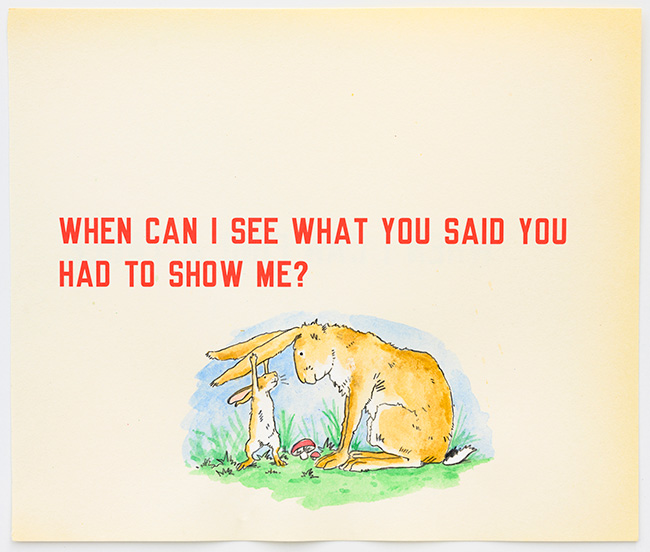
Marijn van Kreij
Untitled (Sam McBratney, Anita Jeram, Raad Eens Hoeveel Ik Van Je Hou, 1995, Lawrence Weiner, Something to Put Something On, 2008), 2020
gouache and pencil on bookpage
21 x 25 cm

Marijn van Kreij
Untitled (Picasso, L’Atelier, 1955, Snow Butter), 2020
gouache and pencil on laserprint
42 x 29,7 cm

Marijn van Kreij
Untitled (Dakloos Bla Bla Bla, De Groene Amsterdammer, Molletje), 2020
gouache, pencil and ink on magazine page
29,5 x 23 cm
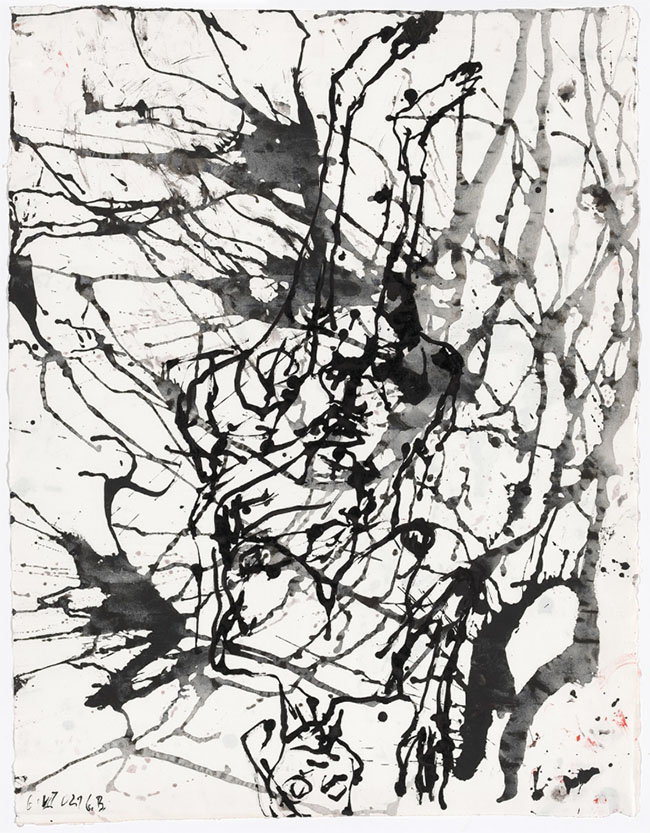
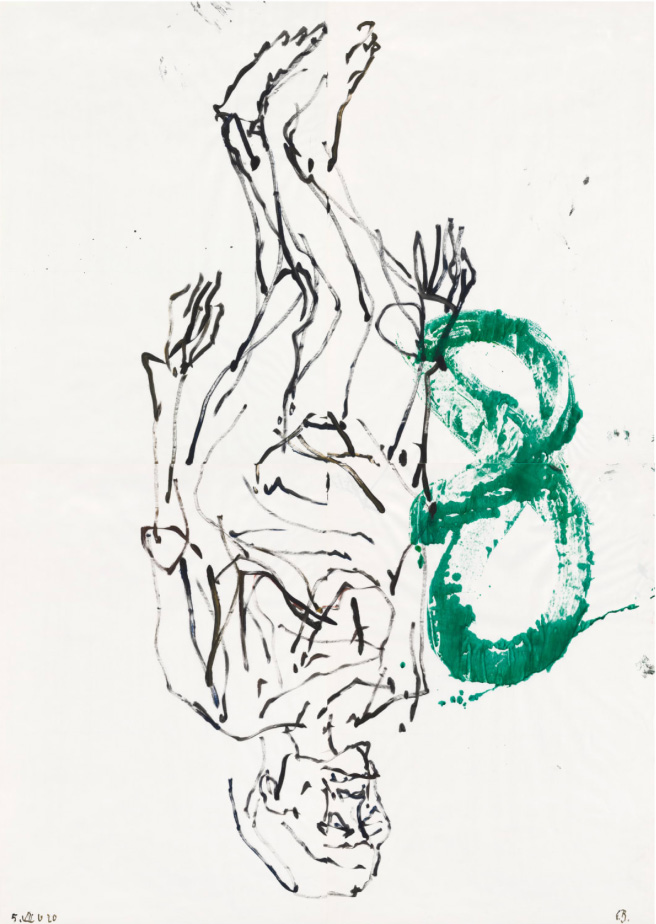
Georg Baselitz
Ohne Titel, 2021
Ink on paper
66.2 x 50.9 cm
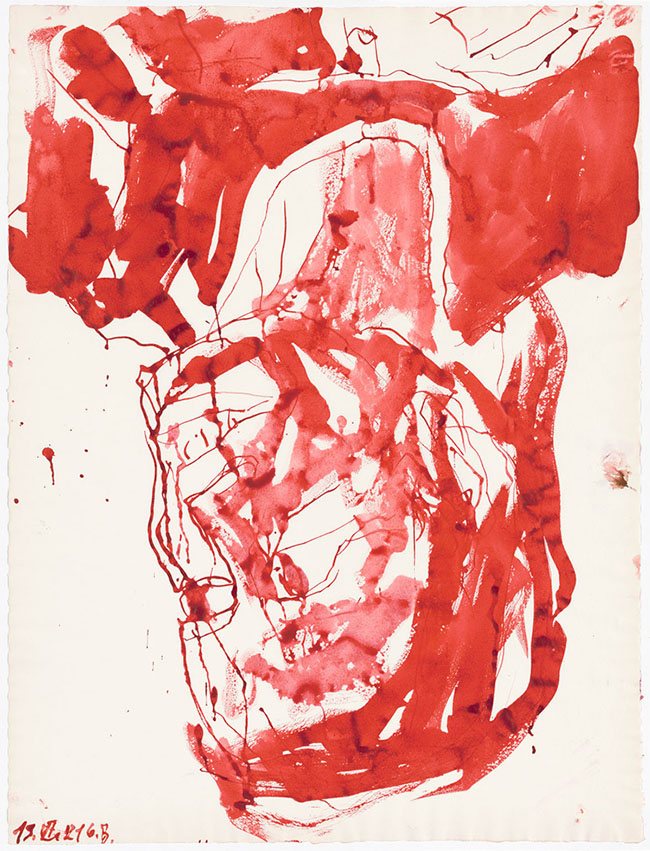
Georg Baselitz
Ohne Titel, 2021
Ink on paper
66.3 x 50.2 cm
[from the pressrelease]
A drawing is always naked.
— Georg Baselitz
Made from memory in one sitting over the summer of 2021, the thirteen experimental and dynamic compositions in red and black India ink reconsider past bodies of work in addition to specific, individual images. Some are loosely based on the seminal portrait of Baselitz’s wife, Portrait of Elke I (1969), which marked the beginning of the artist’s inversion of his images and was recently donated by the artist to the Metropolitan Museum of Art in New York.
His choice to rework Elke repeatedly over the years in the same familiar poses represents an ever-renewing declaration of love, as well as an intimate reflection on change and stability, on the inevitability of ageing, and on the function of portraiture. New self-portraits and depictions of Elke are on view alongside a drawing derived from the well-known painting Schlafzimmer (Bedroom) (1975). Diverging from his recent black ink drawings, the vibrant flesh-red palette of many of the new works is inspired by Henri Rousseau’s 1895 lithograph La Guerre (The War) and intensifies the fragility and sensuousness of these portraits.
These new works are a vivid reminder that drawing has always been at the core of Baselitz’s practice, the line functioning as the seismograph of the artist’s attitude towards image and motif. Taking a look back at ink works from the late 1950s and early 1960s, the profound influence of French poet, dramatist and visual artist Antonin Artaud, a kindred spirit of sorts, becomes instantly evident. It was out of this investigation that Baselitz developed his unique definition of the role of the artist in society, while simultaneously inventing a deeply original language of drawing and painting. These early motifs were drawn in bold, gnarly lines and high contrast ink washes, held together in bouncy yet slightly unsteady and restless compositions.
Now, Baselitz directs the same existential rigor towards himself and his own oeuvre. The lines, drawn with an ink-wet brush and an almost weightless stroke, allow the liquid to pool and follow the pull of gravity or the blow of air, seemingly trailing an invisible compositional grid, substituting for any indication of background or space. Elke and Georg Baselitz appear and disappear out of the thicket of drawn ink, and even, in a dazzling use of color, to bleed in raw redness. The contours, the disegno, of the human figures are fragmentary, tremulous, but also, at times, fluid and very much alive. This new series is an uncompromising self-investigation of an artist in his 84th year. No outside existential spark is needed. It has been replaced by a lifetime of art making stripped bare.

Model Behind Door, Provincetown Studio, 1954
Gouache and crayon on paper
76.2 x 55.9 cm
Allan Kaprow. A Painter… of sorts
Selected Works 1953 – 1975
20 January – 12 March 2022
Hauser & Wirth, Zürich

Allan Kaprow
Seated Nude, Slippers on Floor, 1954
charcoal on paper
65.7 x 50.8 cm
Categories
Index
